
Match Reports by David Watkin
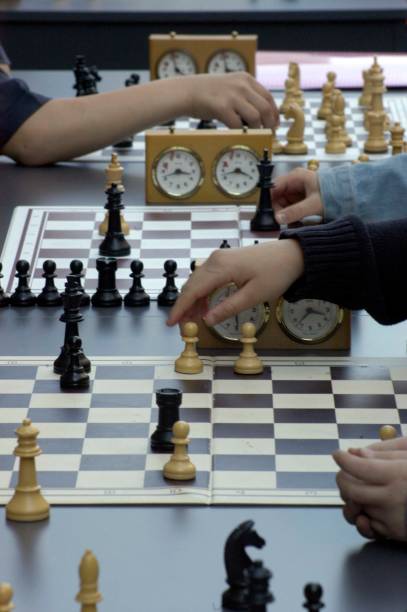
This weekend, congress chess made a welcome return to Aberdeen: five rounds of classical chess, a wide spread of playing strengths, and that familiar mixture of anticipation, tension and quiet camaraderie that defines a good weekend tournament. For club players especially, these events offer something beyond results — a chance to test judgment under pressure, to manage nerves, and, occasionally, to learn something the hard way.
I offer the following observations in that spirit. Aberdeen was quite capable of reminding me of my own limitations too; this was quite clearly a congress, not the Candidates. But across the Major and Minor sections alike, there were moments — small, human, and instructive — that repay a second look. Rather than examples of “right” and “wrong”, they show how practical chess is decided: by decisions taken in the moment, with incomplete information, and just enough pressure to make everything slightly harder than it should be.
Playing for the Win
A single decision can define a game — and it often comes long before the result is clear.
One of the most instructive moments of the weekend came in the Minor, where Stonehaven’s Caroline Duguid, making her congress debut with the black pieces, faced George Wallace. The opening had unfolded sensibly enough, with both players developing naturally, but as the middlegame took shape, White’s queenside knight began to run short of squares.
At this point — with the position turning in Black’s favour — Wallace offered a draw. This is never a neutral act. A draw offer is information. It may signal equality, fatigue, or, as here, discomfort. Caroline chose to play on, and it was both a brave and correct decision. The key question is not the final result, but what the position justified at the time. Here, Black had every reason to continue.
The game did not run in a straight line. Caroline trapped the knight and reached an endgame with a clear material advantage, but failed to consolidate cleanly, allowing Wallace to generate counterplay. His exchange sacrifice cleared the way for a passed pawn, and from there the balance shifted decisively. It was resourceful and imaginative play from White — and a reminder that winning positions still require precision.
For Caroline, the result may feel disappointing, but the earlier decision should not be judged through that lens. Trusting your evaluation and testing it over the board is exactly the habit that leads to improvement.
Lesson: when a draw is offered, ask why. If your opponent appears more concerned than you are, that alone may be reason enough to keep playing.
Applying the Pressure
Not all games are won by tactics; many are won by asking better questions, move after move.
Lewis Matheson’s encounter with Leston D’Costa in the Major was a clear example of this. Facing a significantly higher-rated opponent, Lewis adopted his familiar Caro-Kann Defence and navigated the opening confidently into a balanced middlegame.
Positions of this kind are deceptively difficult: nothing is forcing, yet every move matters. Rather than committing prematurely, Black increased the tension gradually, first on the queenside and then in the centre. The advance …a5 was particularly instructive, opening the queenside and creating immediate attacking avenues, particularly along the a-file where Black’s rooks could become active.
From there, Black’s pieces improved step by step, with pressure building naturally along the newly opened lines. Perhaps most impressive was the willingness to change direction — probing the kingside when appropriate, then switching focus without hesitation when the queenside offered more. This flexibility is a hallmark of strong practical play.
There were moments where White might have escaped, and the advantage was not always secure. But the overall approach — active pieces, constant pressure, and readiness to seize opportunities — ensured Black remained in control. The final mating attack felt like a natural conclusion rather than a sudden breakthrough.
Lesson: advantages are often built, not found. Keep asking questions until the position can no longer hold.
When One Moment Decides
Many games are not lost by strategy, but by one move that goes unchecked.
Jamie Smith’s game against Prithvi Nathan followed familiar London System paths, with both players handling the opening sensibly. Jamie showed good intent with a central break, and the position remained balanced into the middlegame.
Then came the turning point. A natural recapture — played without much hesitation — overlooked a tactical detail, leaving a rook trapped. The move was not obviously wrong, which is precisely why it was dangerous. Black seized the opportunity, and the game tilted decisively.
What followed, however, was anything but routine. The endgame became extraordinary, featuring multiple underpromotions and a sequence of checks that defied logic. Winning positions were simplified, then complicated again; checkmates appeared, disappeared, and reappeared.
Eventually, Black coordinated his pieces for a decisive ladder mate, bringing a chaotic and entertaining game to a close.
Lesson: the decisive moment in a game is often quiet. The moves that look most natural are the ones that demand the most care.
The Long Game
Endgames do not forgive fatigue — they expose it.
Alan Cundill’s win over Katarina Tanzerova demonstrated the demands of endurance and precision. From a French Exchange structure, the game quickly became unbalanced, with Black advancing on the kingside and creating long-term pressure.
There were opportunities to consolidate earlier, but such positions are rarely simple in practice. Tanzerova defended resourcefully, keeping the game alive and creating counter-chances.
As the game simplified, accuracy became critical. At one stage, White appeared to have secured a draw, only for a small misstep in a pawn race to shift the balance again. Even then, the result was not immediate; further chances came and went before the final breakthrough.
Reduced material increases the cost of error. There is less room to recover, and mistakes come at exactly the moment when concentration is lowest.
Lesson: converting an advantage is a separate skill — and often the hardest part of the game.
Preparation
Sometimes the game is decided before both players realise it.
My own game against Murray Whyte offered a lesson in preparation. In the Göring Gambit Declined, both sides followed familiar development, but the position contained a known tactical motif.
When Black captured on d4, the reply Bxc6+ immediately exposed the flaw: the supporting knight is removed with check, and the queen on d4 cannot be saved. This is not calculation at the board — it is recognition.
After that, the task was simply to avoid unnecessary complications and convert cleanly. The game was short, but it illustrates the practical value of preparation.
Lesson: knowing the pattern is often more important than finding it.
Seizing the Moment
Opportunities in chess are brief — and unforgiving if missed.
Michael Clayton’s win over Magizhan Sathiyamoorthy showed the importance of tactical awareness. After a balanced, Slav-like opening, the game remained equal for some time.
The critical moment came with …Qa1+, a move that combined attack with coordination. It forced concessions immediately and led to material gain. From there, Black simplified efficiently into a winning endgame.
There was no need for brilliance — only accuracy. Clayton avoided unnecessary risk and converted steadily.
Lesson: when the moment comes, act decisively. Hesitation is often the difference between advantage and equality.
Conclusion
Aberdeen once again showed why congress chess remains one of the game’s great pleasures. Across both sections, there were ideas worth admiring, mistakes worth learning from, and moments of genuine courage at the board.
Some games were won cleanly, others slipped away, and a few seemed to do both in the space of a single afternoon. For the club player, that is the reality of improvement: not perfection, but better decisions, made slightly more often.
At congress level, games are rarely decided by brilliance alone — but by who handles the moment just a little better.